
 Wo kaufen
 Distributorzone
Blog,
Abc der Beleuchtung,
07.11.2025
Decarbonisation in Architecture: How Lighting Shapes the Future of Sustainable Spaces
Contemporary architecture faces an unprecedented challenge. The construction sector is responsible for over 35% of global carbon dioxide emissions and consumes around 30% of the world’s total energy. At the same time, the regulatory landscape is evolving rapidly — the CSRD directive obliges an increasing number of companies to transparently report their environmental impact. In this context, the word “decarbonisation” ceases to be a trendy slogan and becomes a strategic necessity. For designers and architects, however, the reality is more complex than just numbers: it is about creating places that not only use less energy, but also enhance the impact of interiors on health, user comfort, and the long‑term value of investments.

Product: SERPENT-PLUS
What exactly is decarbonisation and why is the transformation of the construction sector impossible without it?
Decarbonisation is the process of systematically reducing carbon dioxide emissions in a company’s operations and across its entire supply chain. For the construction sector, this means change at every stage — from material selection, through the design of energy‑efficient systems, to managing building lifecycles post‑completion.The call to action is not merely ethical — it is a legal requirement. The CSRD (Corporate Sustainability Reporting Directive) now covers approximately 3,800 Polish enterprises, obliging them to report environmental impacts in line with ESRS standards. For the construction industry and companies supplying building components, this entails unprecedented transparency across the supply chain and clear visibility of product impacts on CO₂ emissions.
Yet the transformation towards climate neutrality is not only about compliance. Low‑emission buildings demonstrate superior energy performance, lower operating costs and, crucially, better conditions for the people who occupy them. Research indicates that appropriately designed lighting reduces eye strain, supports the natural circadian rhythm, and improves work efficiency. This means decarbonisation is not a compromise between quality and responsibility — it is a synergy.

Product: KOZEL-10-BD

Product: HR-SLIM

Product: TULIP
How architecture can drive the transformation: from concept to delivery
The sustainability discourse in construction frequently references international certification frameworks — LEED, BREEAM, DGNB and Poland’s Green Home Certificate. Each defines similar assessment domains: energy efficiency, resource management, material selection, and occupant health and comfort. The common denominator is clear: sustainable construction is a holistic approach to the design and operation of spaces.In practice, architects face concrete questions: How can natural light be maximised while ensuring functional lighting during dark winter afternoons? Which materials have the lowest carbon footprint over the product life cycle? How can we design flexible spaces that will serve for decades without requiring extensive remodelling?
The conference held during Architect@Work in Barcelona in October 2025 — under the banner “Decarbonisation in Architecture” — gathered international perspectives on practical solutions. Participants emphasised that transformation requires a holistic view. It is not about isolated measures, but the integration of many decisions — from site selection to building management systems. Low‑impact materials, intelligent energy management systems, and flexible spatial design — these are the puzzle pieces that together create a building responsible to future generations.
LED lighting: where a designer’s decision directly affects whole‑building emissions
Although lighting may seem like a detail at first glance, in reality it is one of the key factors determining a building’s overall energy intensity. Traditional lamps converted only around 10% of energy into light — the rest dissipated as heat. LED lighting radically changes this equation. Light‑emitting diodes achieve efficiencies in the range of 80–90%, translating into energy savings of around 70% compared with traditional solutions.At building scale, this significantly reduces load on the energy system and — consequently — CO₂ emissions. For the architect, it means more: the ability to create more nuanced, advanced lighting scenarios that would previously have been energetically unacceptable. Modern LED luminaires enable precise light direction, minimising spill, thereby allowing spaces to be designed more efficiently and aesthetically.
Not all LED lighting, however, is of the same calibre. The quality of the light source — expressed in the colour rendering index (CRI) and correlated colour temperature (Kelvin) — directly affects user wellbeing. Light that is too cool, poor at rendering colours, or with low‑frequency LED flicker can cause eye strain or even disrupt circadian rhythms. Light with appropriate photometric parameters supports daytime concentration and natural sleep at night. This is not a marginal comfort detail — it is a matter of health within design.
The longevity of luminaires is another dimension of their decarbonisation impact. Traditional lamps required frequent replacement, generating unnecessary waste and maintenance logistics. Modern LED luminaires can operate for 70,000 hours or more, drastically reducing replacement rates and associated costs and carbon footprint.
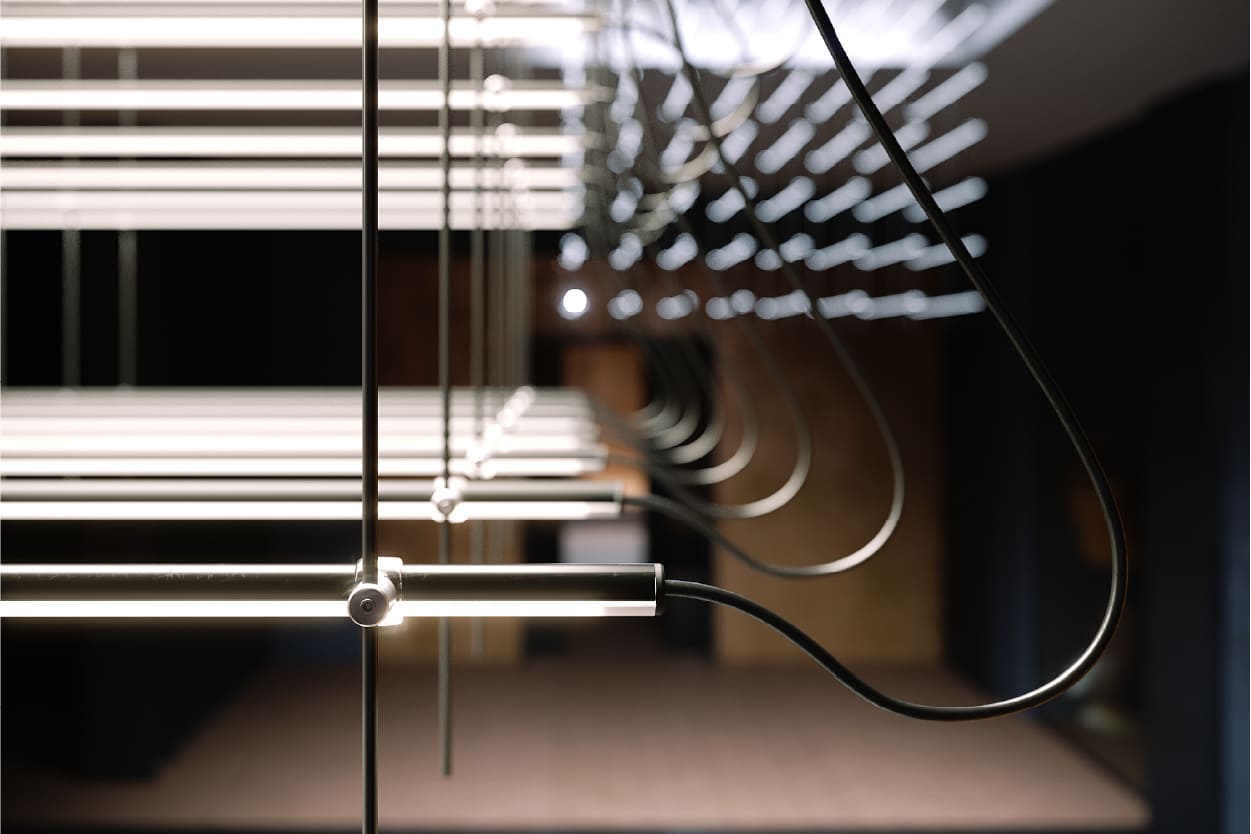
Product: PIKO-O

Product: GIZA-LL

Product: PDS-4-PLUS
EPD certification: how transparency on product impact is raising industry standards
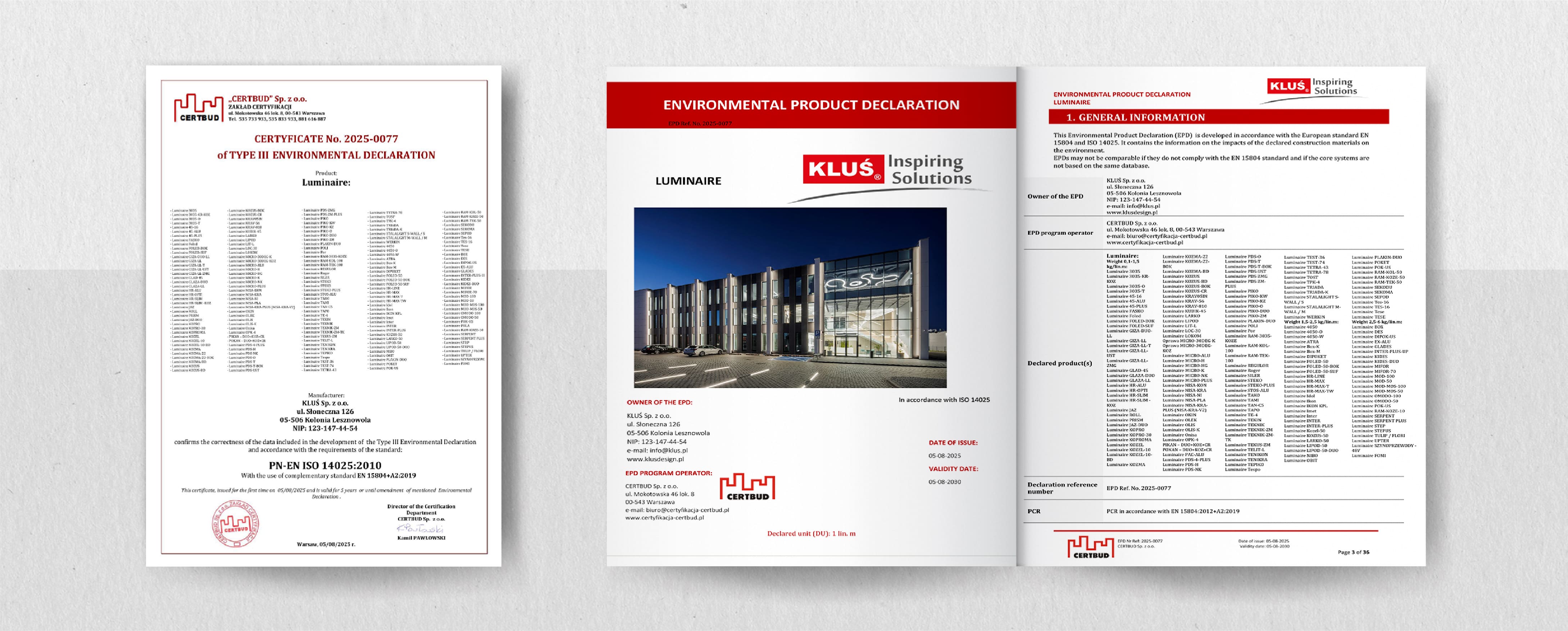
The CSRD requires companies not only to report their overall carbon footprint, but also to ensure transparency regarding products and services. This is where the Environmental Product Declaration — EPD — comes in.An EPD is a document issued by dedicated institutions and verified by independent bodies, containing factual data on a product’s environmental impact across its entire life cycle — from raw material extraction, through manufacturing and transport, to recyclability at end‑of‑life. It is a technical document, but also a communication tool — it enables architects to compare products using robust, verified data rather than marketing claims.
For lighting manufacturers, the importance of EPDs is fundamental. Possessing an EPD is no longer merely a competitive differentiator — it is becoming a requirement, especially where projects are assessed under certification systems such as BREEAM, LEED or Green Home. Architects participating in certified projects must document material choices, and certification systems are increasingly focusing on the environmental parameters of products rather than their functionality alone.
KLUŚ has recently implemented EPD certification across its product portfolio. This signals the manufacturer’s commitment to transparency and responsibility. The EPD report allows designers to precisely estimate the carbon footprint associated with selecting a given luminaire within the context of an entire project. This does not fundamentally change the calculation — it makes it more reliable and verifiable — a value difficult to overstate in the era of ESG reporting.
Lighting and the design of conscious interiors: how light affects spatial wellbeing
Sustainability‑minded contemporary architecture is paying increasing attention to user wellbeing. Through the circadian rhythm, light influences melatonin production — the hormone regulating sleep — and serotonin levels, which affect mood. Properly designed lighting — particularly in the first half of the day with a richer blue spectrum — supports response speed and employee efficiency. Evening lighting with a richer warm‑tone content (around 2700K) supports the body’s natural preparation for sleep.In hotels and commercial environments, this is no longer merely a convenience but a competitive factor. Guests spending the night in spaces with poor‑quality lighting may experience restless sleep — which directly affects their perception of the venue. In offices and business centres, suitable lighting improves employee productivity. This is a substantive benefit of decarbonisation: reducing energy intensity does not have to mean worsening user conditions. On the contrary — it often goes hand in hand with improvement.
Intelligent lighting control systems — adjusting brightness and colour temperature to the time of day, room utilisation, or outdoor conditions — multiply these benefits. Motion sensors switch lights on only where and when they are truly needed. Adaptive systems tune the colour of light to the time of day. The result is both energy savings in the range of 40–60% and enhanced user comfort. It is a harmony that until recently seemed out of reach.
Is decarbonisation an added cost, or a strategic investment in the future?
This question often arises in conversations between designers and developers with investors. The answer is nuanced but concrete: initially — yes, an EPD, luminaire design aligned with international standards, and intelligent control systems are expenditures. However, over the longer term, the equation changes fundamentally.An energy‑efficient building is one with lower operating costs. Reduced energy consumption directly translates into bills. For LED lighting, with a service life of 70,000 hours, replacement and maintenance costs drop dramatically. For commercial investors, this means predictable, low operating costs over decades.
Beyond that, certified sustainable buildings achieve higher market values and are easier to let or sell. Tenants — institutional and individual alike — increasingly value spaces that support their wellbeing and are climate‑neutral. This is not altruism — it is pragmatism. Employees in better‑lit, more comfortable offices are more productive and healthier.
Finally, the CSRD and potential future regulations on minimum climate standards may render today’s investment in decarbonisation a prudent strategic move in a ten‑year perspective. Buildings that do not meet contemporary energy‑efficiency standards may in future face challenges with mortgages, insurance or occupancy.

TRADE FAIR: Architect@Work Barcelona 2025
TRADE FAIR: Architect@Work Barcelona 2025
TRADE FAIR: Architect@Work Barcelona 2025
Architect@Work Barcelona 2025: what architects and designers taught us about decarbonisation in practice
The conference held alongside Architect@Work in Barcelona brought together an international community of professionals committed to transforming the built environment. Discussions covered specific case studies — from the renovation of historic buildings in Barcelona to the design of contemporary schools integrating natural materials, daylight, and intelligent lighting systems.A common thread was the observation that decarbonisation requires collaboration — between designers, material manufacturers, systems engineers and, above all, a willingness to think in product life‑cycle terms. One key takeaway: decarbonisation is not a single solution, but the sum of small, informed decisions. Selecting a material with a 10% lower carbon footprint, choosing a lighting system saving 40% energy, designing a flexible space that won’t need extensive remodelling in 15 years — together, these add up to a building that is genuinely climate‑neutral.
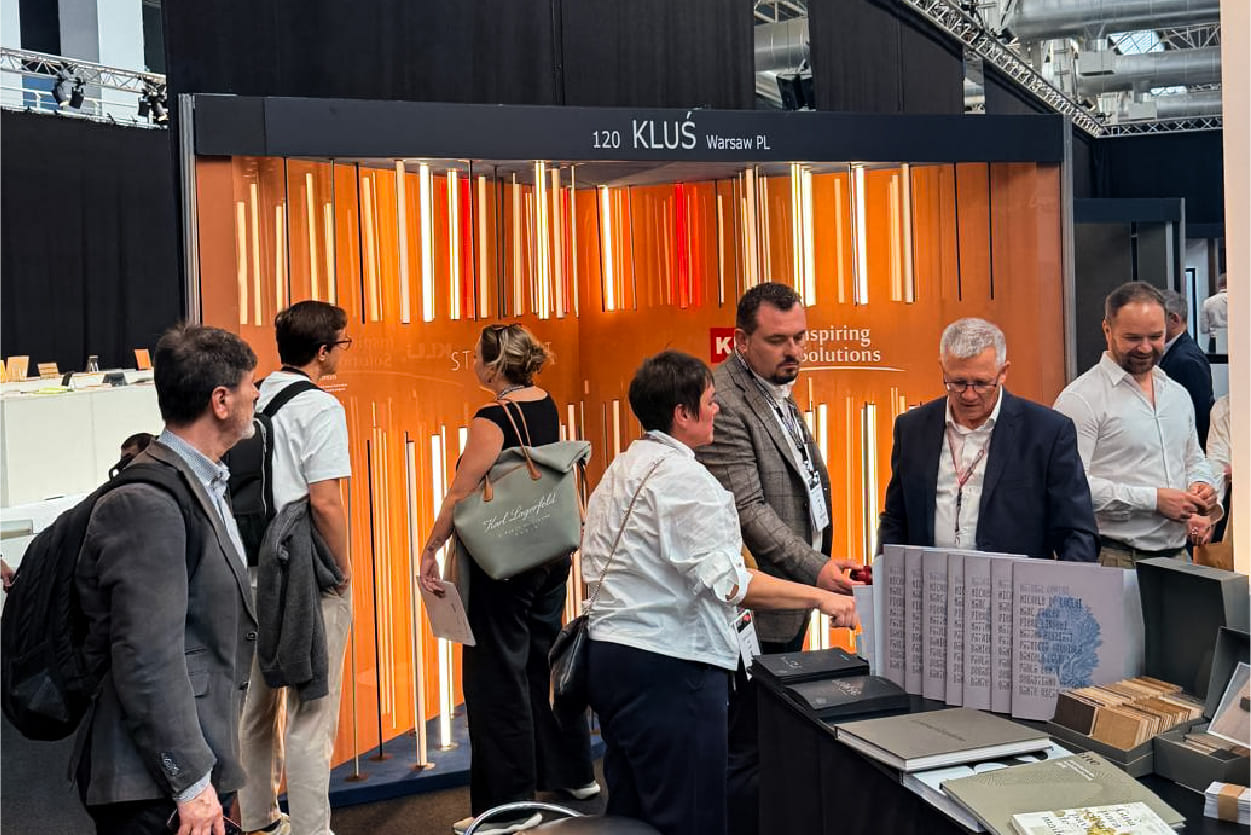
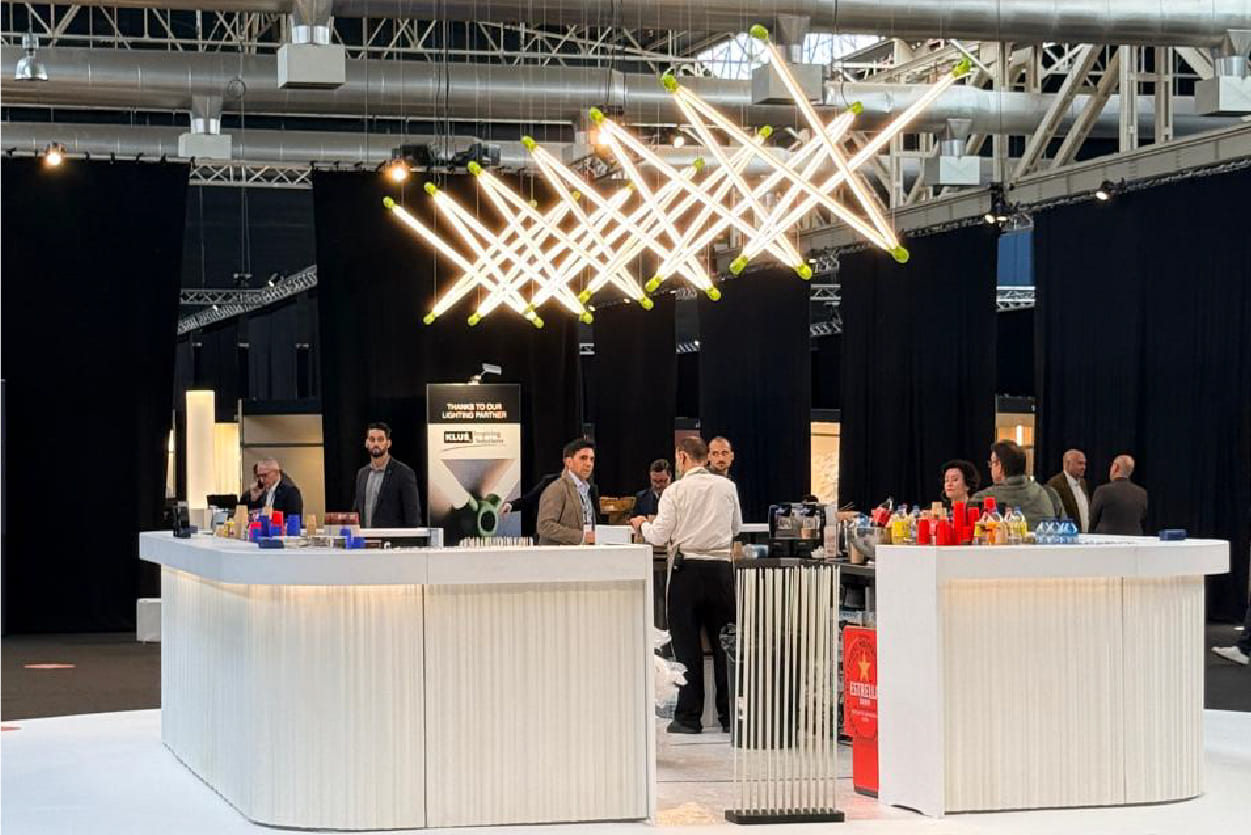
At Architect@Work Barcelona, on its stand (number 120), KLUŚ presented one of its answers to this challenge. STALALIGHT luminaires — inspired by nature, blending the precision of LED technology with organic design — formed the centrepiece of the display. Equally important was KLUŚ designers’ message: lighting is not a footnote in sustainable building design — it is its core. The accompanying JAZ‑DUO‑ROLL installation suspended in the central area of the event made an unequivocal statement: light can be both technologically advanced and artistically subtle.

Product: KOPROMA
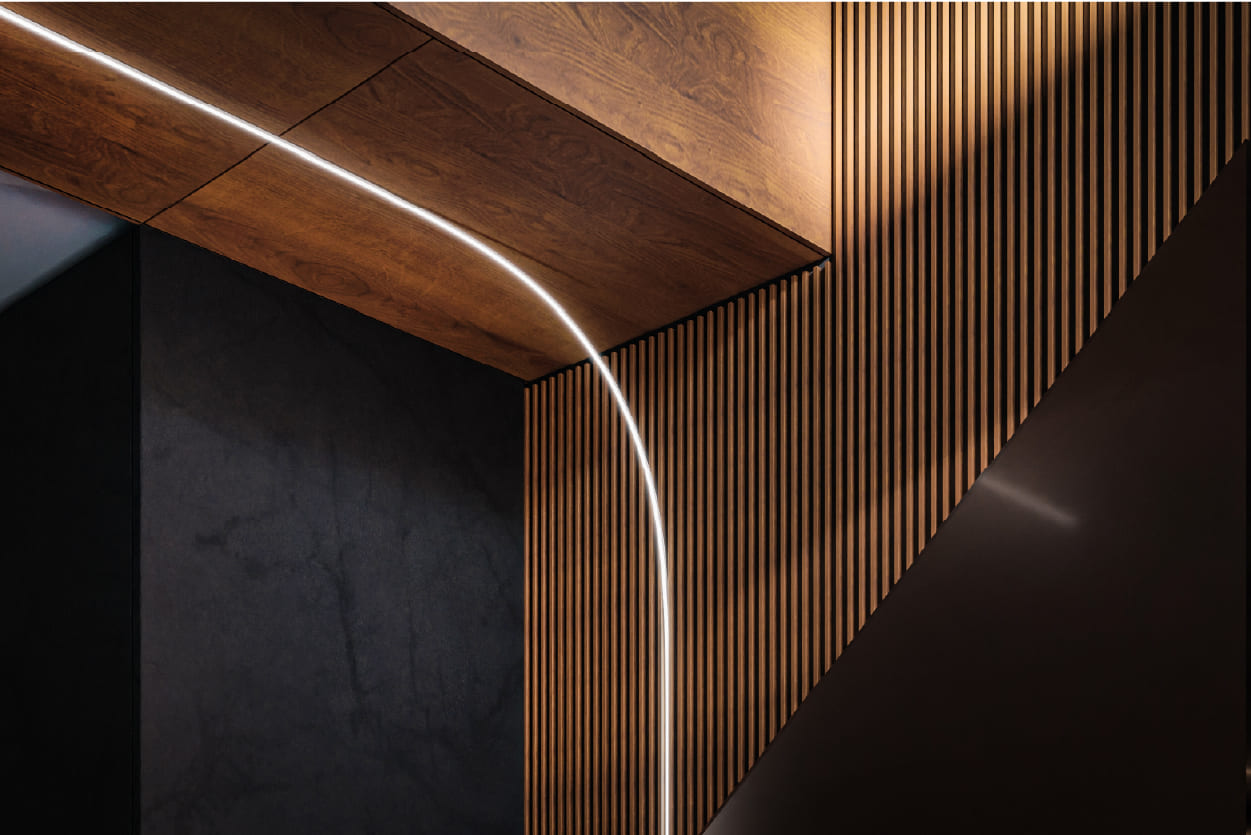
Product: PIKO
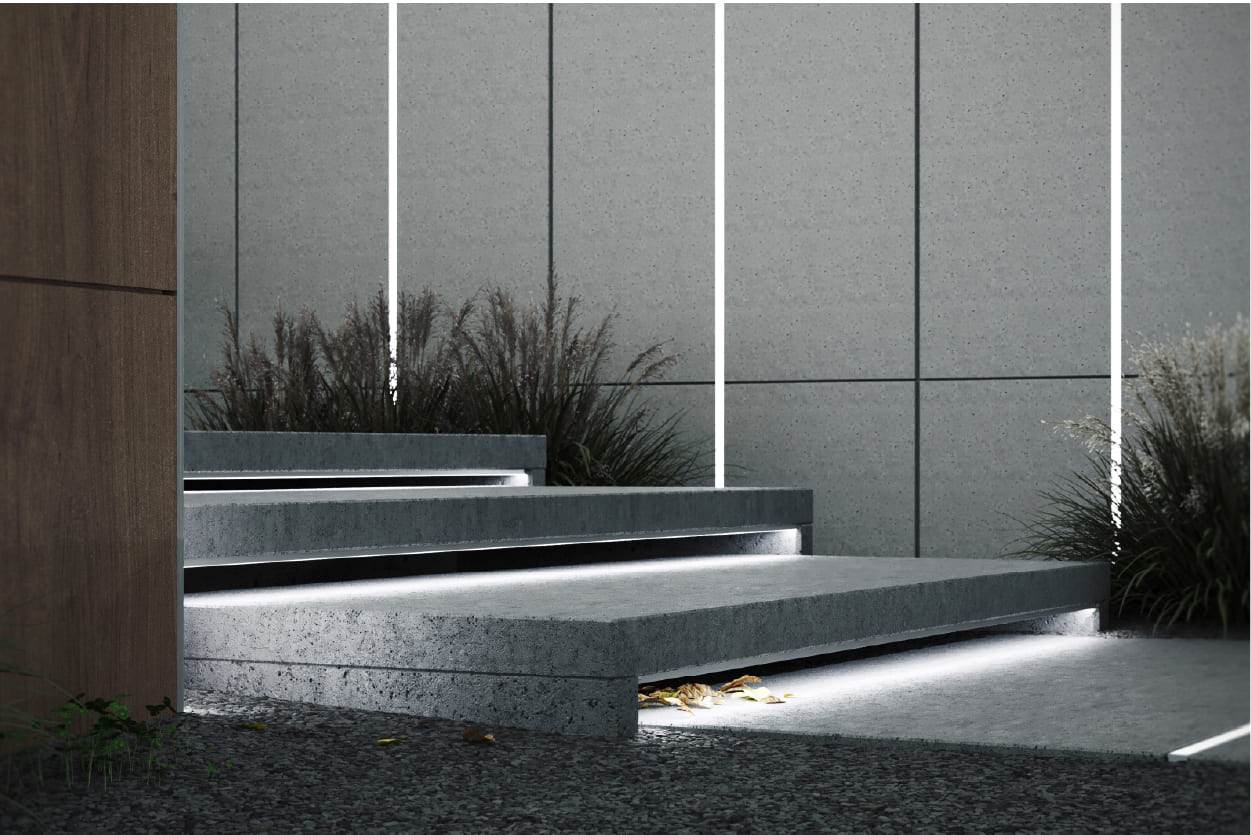
Product: HR-SLIM
How the lighting industry is shaping a climate‑neutral future
For lighting manufacturers such as KLUŚ, decarbonisation is both a challenge and an opportunity. The challenge lies in optimising production processes, shortening supply chains, investing in lower‑carbon technologies and, ultimately, verifying impacts through certifications such as EPD.The opportunity is to lead the transformation. A manufacturer who recognises that today’s architect is not only looking for a beautiful luminaire, but a beautiful luminaire with a documented low carbon footprint and parameters that support interior wellbeing, gains not only market position, but — above all — technical authority.
LED technology has opened the door to this shift. Traditional luminaires were not energy‑efficient from the end user’s perspective, so questions about their production‑phase carbon footprint were secondary. LEDs change this dynamic. Energy savings over the product’s service life (above 70,000 hours) offset the energy used in manufacturing within the first 3–4 years of operation. From that point on, every hour of LED lighting is pure savings for the building and the environment.
This makes investment in high‑quality luminaires with long service life and a documented low carbon footprint both economically and environmentally rational — without compromise.
Conclusion: lighting as an instrument of change
Decarbonisation in architecture is a more complex reality than CO₂ reduction alone. It is considered design that accounts for product lifecycles, user health impacts, long‑term asset value, and practical creativity.Lighting holds a special place in this transformation. It is simultaneously a technology, a design tool, and a medium of communication between space and its users. Well‑designed LEDs — energy‑saving, supportive of the natural circadian rhythm, aesthetically advanced, and manufactured with environmental responsibility — exemplify the contemporary approach to sustainable construction.
For practitioners — architects, designers, investors — this implies one thing: there is no longer any excuse for compromise. Decarbonisation and user comfort go hand in hand. Environmental responsibility and beauty go hand in hand. Financial viability and climate neutrality go hand in hand.
This is the message of Architect@Work Barcelona 2025 and these are the challenges the lighting industry sets for itself — and the opportunities that lie ahead.
